China Display Font for Handmade Labels & Invitations
If you've ever held a beautifully lettered candle label, traced the elegant curves of a wedding welcome sign, or admired the bold presence of a boutique tote bag, you know how much a single font can elevate your handmade product. That’s where China steps in—not as background filler, but as a quiet authority on your shelf, your cardstock, or your digital template. This isn’t just another display font. It’s a premium knightly typeface built for crafters who value both dignity and distinction in their work.
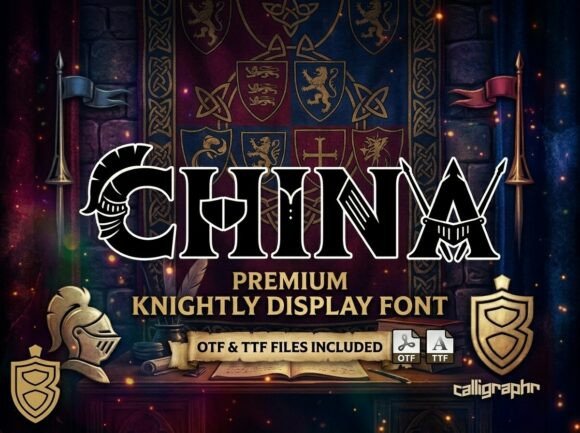
China features bold, monumental letterforms—clean yet commanding, structured yet expressive. Think carved stone inscriptions meets modern craftsmanship: high-contrast strokes, subtle serif flourishes, and generous x-heights that keep readability strong even at smaller sizes. Its personality is noble without being stiff, traditional without feeling dated. Whether you’re designing for a rustic farmhouse market or a luxury bridal boutique, China communicates quality before a single word is read.
For physical product creators, China shines brightest in short-form, high-impact uses. It’s ideal for product labels (candles, soaps, spice jars), gift tags, sticker headers, greeting card titles, and invitation monograms. On a 2”x3” kraft tag, China holds its weight with clarity—no blurring, no lost detail when cut on a Cricut or Silhouette. Its open counters and generous spacing mean it cuts cleanly even at 18–24pt on vinyl or printable sticker paper. For larger applications—like wooden signs, wall art prints, or framed planner covers—China scales up effortlessly, filling space with presence rather than noise.
Seasonal sellers will love how naturally China adapts: use it for “Hand-Poured Soy Wax” on autumn candle labels, “Est. 2023” on vintage-style shop signage, or “Mr. & Mrs.” on minimalist wedding invitations. It pairs especially well with handwritten scripts for names or dates—imagine China for “The Smith Wedding” above a delicate cursive “October 12, 2024”. For contrast and balance, pair it with a clean sans serif like Montserrat or Lato for body text, ingredient lists, or care instructions. If you're building a cohesive brand identity across packaging, social graphics, and digital downloads, China becomes your anchor—consistent, recognizable, and quietly luxurious.
Printable designers and SVG creators will appreciate how China renders crisply in PDFs and vector exports. Its bold outlines hold up in low-res mockups and print previews, meaning your Etsy listing thumbnails look sharp, not fuzzy. When layered into Canva templates or Procreate stationery kits, China adds instant typographic sophistication—no extra design skills required. And because it’s designed as a display font, it avoids the pitfalls of overused “vintage serif” fonts: no excessive ornamentation, no fragile thin strokes that vanish on inkjet prints, and no awkward kerning surprises when typing “THE” or “WEDDING”.
Before adding China to your next project, check what’s included: most premium versions offer OpenType features like stylistic alternates, ligatures (for smoother “ff”, “fi”, “fl” connections), and sometimes multilingual support—including extended Latin characters useful for international Etsy shops or bilingual event invites. File formats typically include OTF and TTF, compatible with Cricut Design Space, Silhouette Studio, Adobe Creative Cloud, Affinity apps, and free tools like Inkscape or GIMP.
Here’s what works—and what doesn’t—with China in practice:
- Works beautifully: Product names (“Wild Sage Candle”), shop banners (“Hearth & Hive”), wedding signage (“Welcome to Our Love Story”), printable wall art quotes, mug designs (“Brave Heart”), and boutique price tags.
- Best avoided for: Long paragraphs, ingredient lists, fine-print legal text, or tiny QR code labels under 12pt—this is a display font first, not a text face.
- Pro tip: When cutting vinyl or iron-on for shirts or totes, convert China to outlines in your design software first—its clean vectors ensure crisp edges every time.
Licensing matters—especially if you sell physical goods, digital templates, or SVG files. China is a commercial font, meaning you’re fully cleared to use it in products you sell: printed invitations, downloadable planners, sticker sheets, embroidered patches, and even client-branded merchandise—no extra fees or attribution required. Just make sure you’ve purchased the full commercial license (not a free or personal-use version), and you’re set to scale confidently.
What makes China different from other display fonts isn’t just its chivalric charm—it’s how thoughtfully it bridges aesthetics and utility. You don’t have to sacrifice legibility for elegance, or versatility for uniqueness. It’s the kind of typeface that makes customers pause, then remember your brand—not because it shouts, but because it stands with quiet confidence. Whether you’re pressing foil onto a wedding menu, weeding vinyl for a nursery sign, or exporting a best-selling Canva template, China gives your work a grounded, intentional voice.
So the next time you’re choosing a font for a new product line or seasonal collection, ask yourself: does it reflect the care I put into every stitch, pour, and press? With China, the answer is yes—every time.